How to Calm Anxiety Naturally Gentle and Effective Techniques
That anxious feeling—it's become a constant hum beneath the surface of modern life for so many of us. Learning how to calm anxiety naturally is about more than just wishful thinking. It's about having practical, evidence-backed tools in your back pocket to soothe your mind and body when you need them most. This guide is all about those gentle yet powerful techniques that can help you reclaim a sense of peace.
Understanding Anxiety in Today's World
Let’s be honest: feeling anxious isn’t a rare event anymore. For many of us here in Mississippi, it’s a familiar weight. It's the racing thoughts that keep you staring at the ceiling at 2 AM, the tight knot of tension in your shoulders that never seems to go away, or that persistent worry that just won't quit.
Anxiety is your body's natural alarm system. The problem is, in our constantly-connected, high-pressure world, that alarm often gets stuck in the "on" position.
Modern life throws a lot at us. Financial stress, demanding jobs, and the endless scroll of bad news on our phones can easily overwhelm our nervous systems. It’s no wonder so many of us feel caught in a cycle of worry that seems impossible to break.
You Are Not Alone in This
If you're feeling this way, the first thing to know is that you are far from alone. This feeling of being overwhelmed isn't some personal failing—it's a very human response to an increasingly demanding world. The numbers paint a clear and startling picture.
Globally, anxiety was already the most common mental health condition before 2020, affecting a staggering 301 million people in 2019. Then, the pandemic hit, and that number shot up by a massive 27.9% in just one year . By 2021, the number of people grappling with anxiety had climbed to 359 million . This isn't just a local issue; it's a shared global challenge. You can read more about the rise in anxiety statistics and see for yourself just how widespread this has become.
A Path Forward with Natural Methods
Here's the good news: you have the power to manage these feelings. A holistic approach—one that looks at your mind, body, and daily habits together—offers a real, sustainable path toward finding a lasting sense of calm.
Instead of seeing anxiety as an enemy you have to defeat, try thinking of it as a signal. It's your body telling you that something is out of balance and asking for a little help. Natural calming methods are the tools you can use to answer that call.
This guide is designed to give you those tools. We're going to walk through practical, accessible strategies that don't require a prescription but do require a bit of practice. From simple breathing exercises to mindful lifestyle changes, these techniques help you build resilience from the inside out, empowering you to navigate life's challenges with a little more peace.
Immediate Relief with Grounding and Breathing Techniques
When a wave of anxiety hits, it can feel like your thoughts are spiraling completely out of control. In those moments, you need something that works right now , no matter where you are. That's where grounding and breathing techniques come in. They are incredibly powerful tools that pull your mind out of the chaos and back to the present moment, offering almost immediate relief.
These methods work by tapping into your body's natural relaxation response. As more people seek non-drug alternatives for anxiety, these time-tested practices have proven highly effective. For example, simple deep breathing exercises can trigger your parasympathetic nervous system, which helps reduce stress hormone (cortisol) levels by up to 25% in just a few minutes. Another technique, progressive muscle relaxation, has helped 70% of users report feeling less anxious after only four weeks of practice.
The data is clear: these methods work.
Anchor Yourself with the 5-4-3-2-1 Method
One of the simplest and most effective ways to stop an anxiety spiral dead in its tracks is the 5-4-3-2-1 grounding technique . It works by forcing your brain to shift its focus from the internal storm to your immediate, physical surroundings using your five senses.
Here’s how to do it:
- 5 Look: Name five distinct things you can see around you. Don't just glance; really notice their color, shape, and even texture from afar.
- 4 Touch: Identify four things you can physically feel. This could be the soft fabric of your shirt, the cool surface of a desk, or the solid feeling of your feet on the floor.
- 3 Hear: Listen for three distinct sounds. Maybe it’s the hum of the air conditioner, distant traffic, or the sound of your own quiet breath.
- 2 Smell: Pinpoint two different scents in the air. Can you smell coffee brewing in the next room or the fresh scent of rain outside a window?
- 1 Taste: Finally, acknowledge one thing you can taste. Take a sip of water, pop a mint in your mouth, or simply notice the current taste in your mouth.
This sensory checklist acts as a mental anchor, pulling your attention away from those racing thoughts and grounding you firmly in the real world.
The visual below shows how external stressors can trigger internal feelings and how we can choose different approaches to manage them.
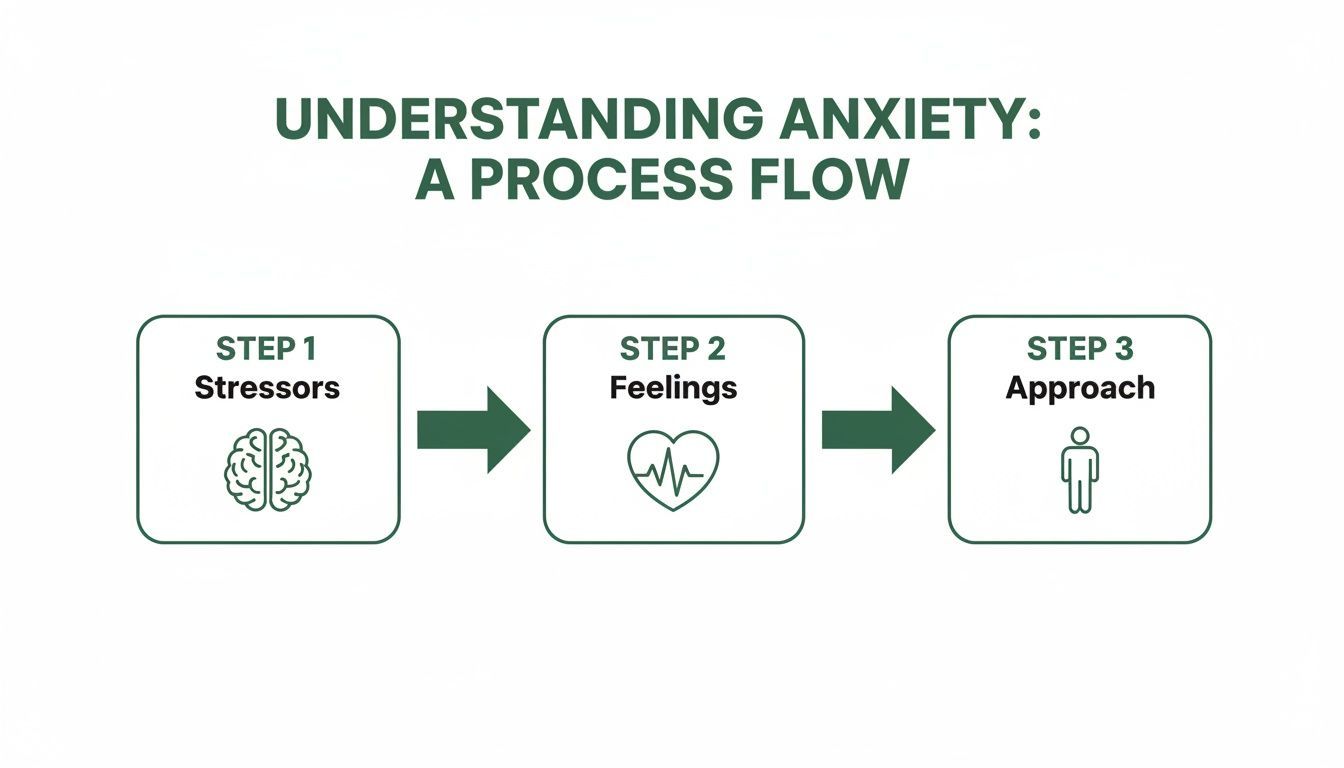
This process is a great reminder that while we can't always control the stressors that come our way, we can choose how we respond to the feelings they create.
Master Diaphragmatic Breathing for Instant Calm
When you feel anxious, your breathing naturally becomes shallow and rapid, which only signals more panic to your brain. Diaphragmatic breathing, often called "belly breathing," completely reverses this process.
By taking slow, deep breaths that fully engage your diaphragm, you send a powerful message to your nervous system: it's time to relax. This simple action can lower your heart rate and start easing physical tension in just a few moments.
Instead of breathing from your chest, try to draw air deep down into your belly. You can place one hand on your stomach to feel it rise as you inhale slowly through your nose for a count of four. Then, feel it fall as you exhale slowly through your mouth for a count of six. Repeating this just a few times can create a profound sense of calm.
For a deeper dive, you can also learn more about other effective relaxation techniques in our detailed guide.
Quick Anxiety-Calming Techniques At a Glance
When you need a quick reference, this table summarizes the techniques we've covered for fast-acting relief.
| Technique | How It Works | Best For |
|---|---|---|
| 5-4-3-2-1 Grounding | Engages all five senses to pull your focus away from racing thoughts and into the present moment. | Sudden panic or when you feel your thoughts starting to spiral out of control. |
| Diaphragmatic Breathing | Activates the body's relaxation response (parasympathetic nervous system) to slow heart rate and reduce tension. | Moments of high stress, before a stressful event, or anytime you feel physical symptoms of anxiety. |
Keep these tools in your back pocket. They are simple, discreet, and can be used anywhere to regain a sense of control when you need it most.
Building Long-Term Calm Through Lifestyle Habits
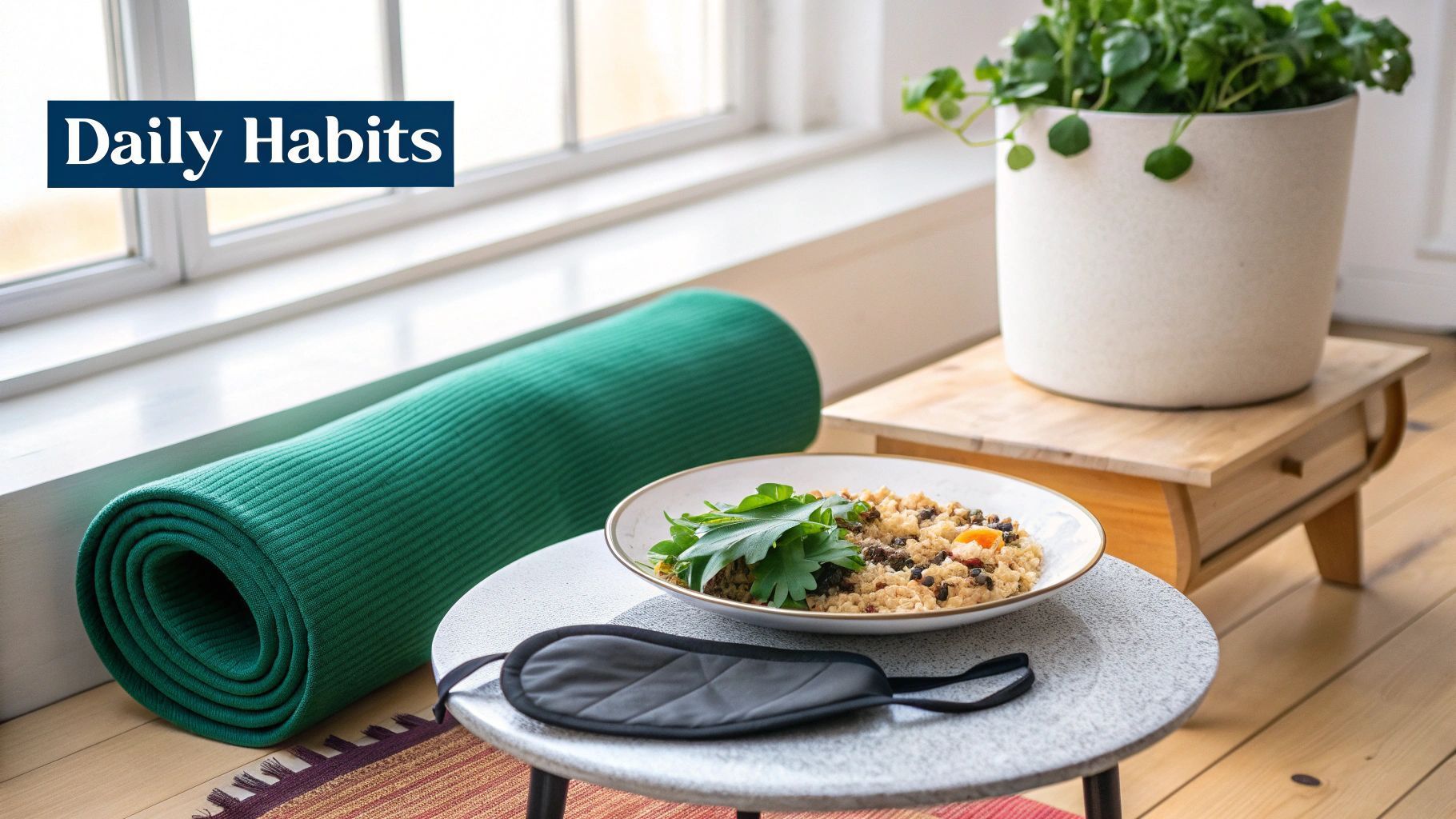
While those in-the-moment techniques are crucial for immediate relief, learning how to calm anxiety for the long haul really comes down to the daily habits you build. It's about creating a lifestyle that supports your nervous system, not one that constantly works against it. This isn't about a massive overhaul overnight, but making small, sustainable changes that add up over time, focusing on three core pillars: nutrition, sleep, and movement.
Fueling Your Body to Soothe Your Mind
What you eat has a direct, and often immediate, impact on your mood and anxiety. Think of your body like a car—it simply runs better on high-quality fuel. For your nervous system, this means focusing on foods that keep your blood sugar stable and deliver the nutrients your brain needs to stay balanced.
A diet filled with processed foods, sugar, and simple carbs can send your energy levels on a wild ride of spikes and crashes. That shaky, jittery feeling? It can physically mimic the symptoms of anxiety, tricking your body into a state of alarm. A balanced diet, on the other hand, helps maintain a steady state of calm.
Simple Nutritional Shifts for Anxiety:
- Choose Complex Carbs: Foods like oatmeal, quinoa, and sweet potatoes release energy slowly, preventing the blood sugar rollercoaster that can trigger anxious feelings.
- Get Your Magnesium: This mineral is nature's relaxant. You can find it in leafy greens, nuts, seeds, and even dark chocolate. It's a simple way to help calm your nervous system.
- Watch the Caffeine: A morning coffee is a non-negotiable ritual for many of us, but too much caffeine can easily kick your fight-or-flight response into overdrive, leaving you feeling restless and on edge.
The Critical Role of Restorative Sleep
There's nothing more frustrating than lying in bed with a racing mind when all you want is to sleep. But here's the catch-22: a racing mind prevents sleep, and a lack of sleep fuels anxiety. It's a vicious cycle. Improving your sleep hygiene —the habits and routines around bedtime—is one of the most powerful things you can do to break that pattern.
Your brain and body desperately need sleep to repair, process emotions, and hit the reset button. When you consistently get less than you need, your ability to handle everyday stress plummets, making you far more vulnerable to anxious thoughts.
To quiet your mind at night, start building a wind-down routine. This signals to your body that it's time to shift gears. It could be as simple as putting your phone away an hour before bed, reading a book (a real one!), or taking a warm bath. The key is consistency. For more ideas on managing that mental load, check out our guide on 6 effective coping strategies for anxiety .
Gentle Movement for a Calmer State
You don't need to run a marathon to get the anxiety-busting benefits of exercise. Physical activity is one of nature's most effective tools for anxiety because it helps your body process and burn off excess stress hormones like cortisol while boosting mood-lifting endorphins.
Even just a walk in nature can have a profound effect. One study involving 20,000 adults found that just 30 minutes in a natural setting each day was linked to a 20% drop in anxiety symptoms. Another massive study from Harvard, looking at over 100,000 adults , showed that getting 150 minutes of moderate activity a week can slash anxiety risk by 26% .
For folks here in Mississippi, where chronic pain often goes hand-in-hand with anxiety, these natural approaches can be especially helpful. It's about finding something you actually enjoy—a brisk walk, some gentle yoga, or just stretching in your living room. When movement feels like a positive habit instead of another chore, you're more likely to stick with it.
Reshaping Your Relationship with Anxious Thoughts
Anxiety often feels like it's happening to you—a storm of thoughts and feelings that feels completely out of your control. But you have more power over your own mental landscape than you might think. The key is to shift your perspective. Instead of getting caught in the storm, you can learn to become a calm observer of it. Let's walk through how to do that using mindfulness and some simple cognitive techniques.
Introducing Mindfulness: An Exercise in Observation
First things first: mindfulness isn't about emptying your mind or stopping your thoughts. Trying to do that is an impossible task that just creates more stress.
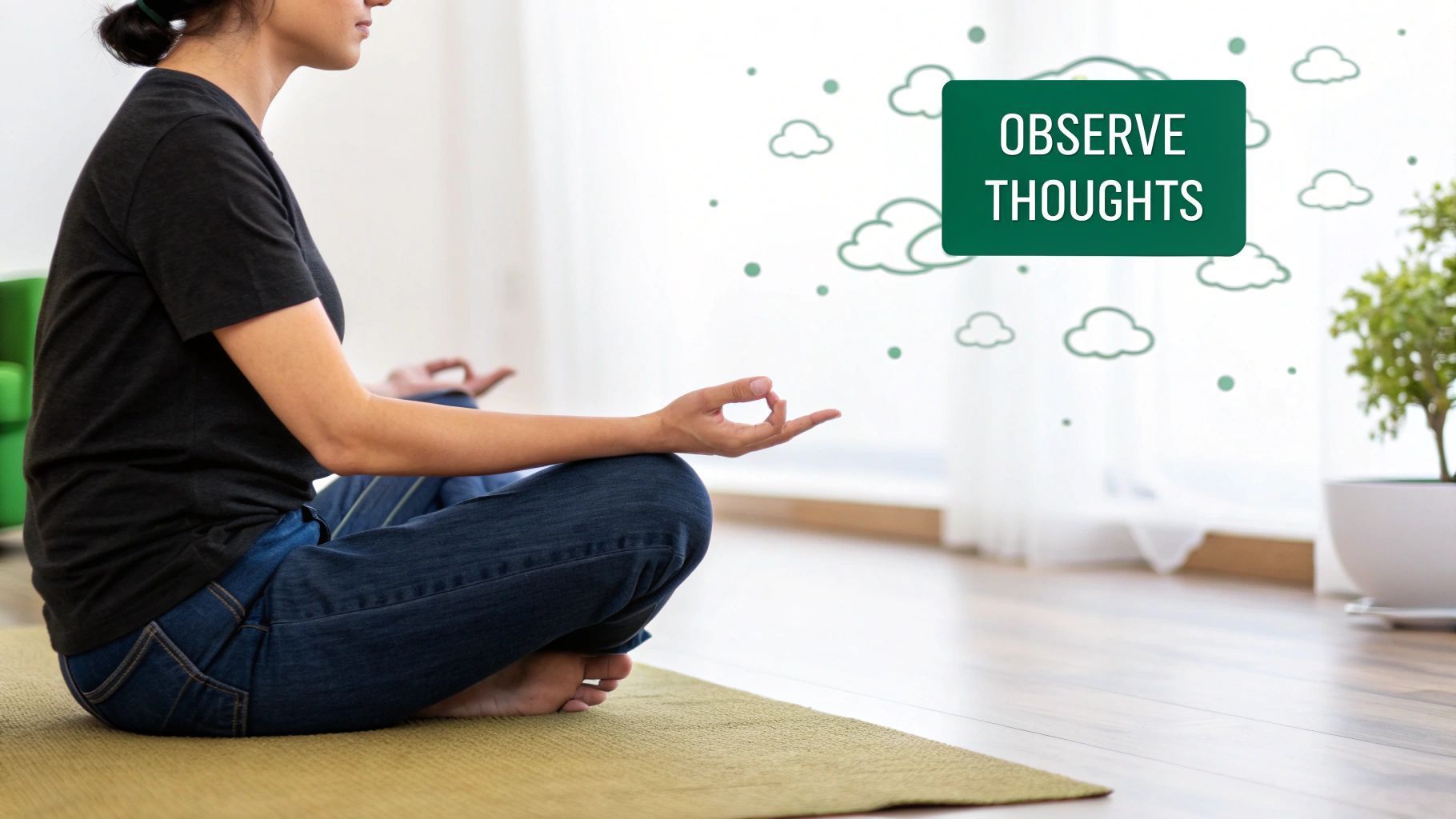
Instead, mindfulness is the simple, powerful practice of just noticing your thoughts as they pop up, without judging them or getting swept away. Think of your thoughts like clouds passing in the sky. You can watch them float by without having to get on board and ride every single one.
This practice creates a small but crucial bit of space between you and your anxious thoughts. It's in that space that you start to get your sense of control back.
A Simple Mindfulness Exercise to Try Right Now:
- Find a comfortable spot. Sit somewhere you can be upright but relaxed for just a few minutes without being disturbed.
- Focus on your breath. Close your eyes if you'd like, and just bring your attention to the feeling of your breath moving in and out of your body. Don't change it, just notice it.
- Acknowledge thoughts as they come. When a thought inevitably appears, simply label it in your mind as "thinking" and gently guide your focus right back to your breath.
- Keep returning, gently. Continue this for 3-5 minutes. The real goal isn't to have a blank mind, but to practice the act of returning to your breath again and again.
This simple exercise is like a workout for your brain, training it to be less reactive and giving you a fundamental skill for managing anxiety.
Change Your Thoughts, Change Your Reality
Beyond just observing your thoughts, you can learn to actively challenge and reframe the ones that are fueling your anxiety. This is a core idea from Cognitive Behavioral Therapy (CBT) called thought reframing .
Anxious thoughts are usually automatic, negative, and frankly, not always based in reality. When you learn to question them, you strip them of their power.
Your thoughts are not facts. They are just mental events that you can learn to investigate and, if needed, correct. This is the foundation for building mental resilience and a lasting sense of inner peace.
For instance, an automatic thought might be, "I'm going to totally mess up this presentation, and everyone will think I'm incompetent." That thought alone can trigger feelings of panic and dread.
Reframing means you catch that thought, challenge it ("Have I always failed before? What's a more realistic outcome?"), and then replace it with something more balanced. You can explore more Cognitive Behavioral Therapy techniques to build out a more robust mental toolkit. This practice truly helps you learn how to calm anxiety naturally by rewiring the very patterns that create it in the first place.
Exploring Holistic Support Options in Mississippi
Beyond the powerful habits you build in your daily life, several other natural options can support your journey toward calm. For many of us here in Mississippi, finding the right blend of support is the real secret to managing anxiety effectively. This often means looking at trusted, evidence-backed herbal aids while also understanding the state-specific programs available for certain health conditions.
Some of the most respected natural remedies have been soothing the human nervous system for centuries. You can find more details in our dedicated article on natural remedies for anxiety , but their gentle power is hard to ignore.
Take chamomile tea, for example. One study found it slashed symptoms of Generalized Anxiety Disorder by 50% over eight weeks. Lavender aromatherapy isn't just a pleasant smell; it’s been shown to cut anxiety by 20-30% in clinical settings. And for that mental fog that often comes with chronic pain, the omega-3s in foods like salmon can lower inflammation-linked anxiety by 20% . These aren't just old wives' tales; they're findings from studies involving thousands of people, showing the real impact of nature-based support.
Understanding Medical Marijuana in Mississippi
For some Mississippians, anxiety isn't a standalone issue—it's deeply tangled up with other chronic health problems. In our state, there is a medical marijuana program designed to provide an alternative path for people with specific qualifying conditions. It's crucial to see this for what it is: a medical option that should be approached with the same care and consideration as any other treatment plan.
The program allows someone with a qualifying debilitating medical condition to get a medical marijuana card. With that card, they can legally access specific products from licensed dispensaries for therapeutic use. The entire point is to offer a different kind of relief that can help improve a person's overall quality of life.
Mississippi's medical marijuana program is strictly therapeutic. It's designed to help patients manage symptoms tied to specific health conditions, all under the guidance of a qualified practitioner. It’s a structured, regulated part of a bigger wellness plan.
The Role of a Medical Marijuana Card
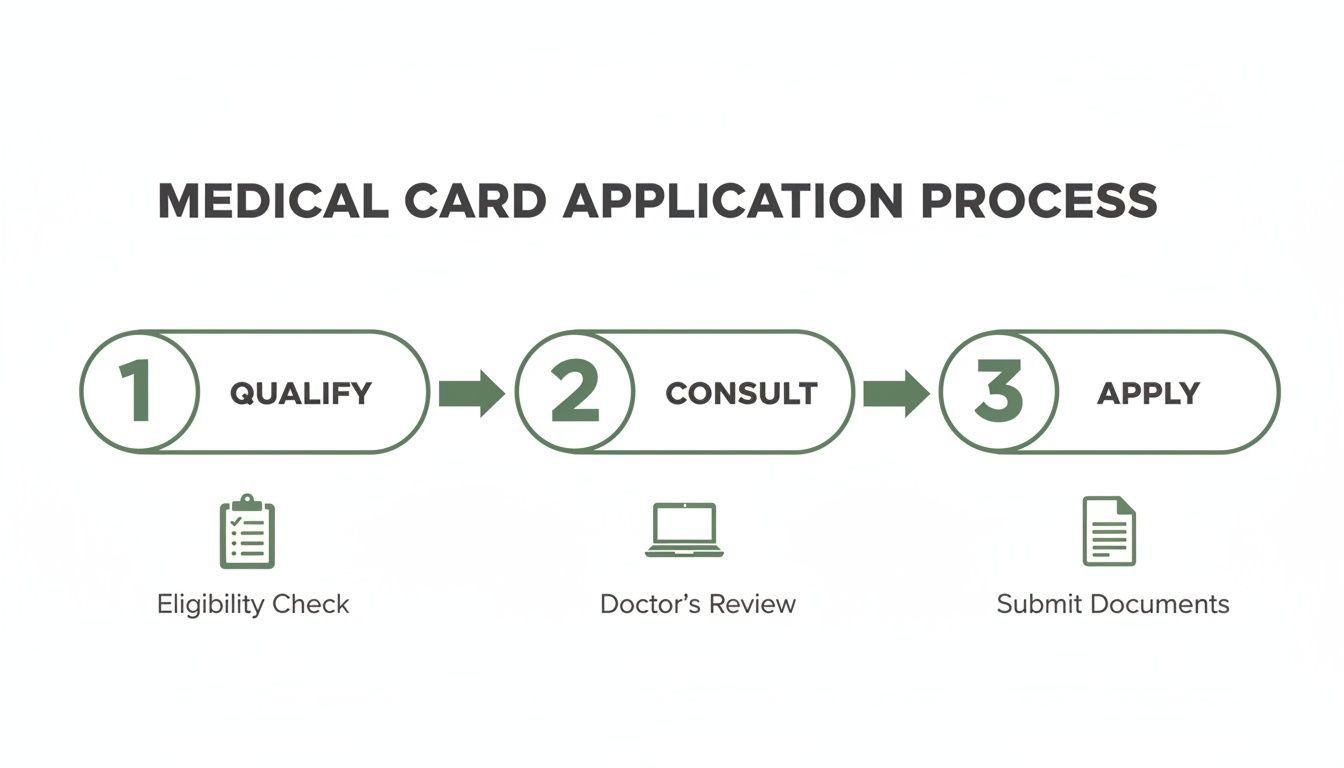
Getting a medical marijuana card in Mississippi isn't like buying something over the counter. It’s a formal medical process. It all starts with a consultation with a healthcare provider who can certify that you have a qualifying condition, ensuring it’s an appropriate and safe choice for your specific health situation.
Many people find that one of the biggest benefits is a reduction in the very symptoms that fuel their anxiety, like chronic pain or nausea. By getting the root physical issue under control, they often discover their mental and emotional distress lessens, too, creating a more peaceful state of mind.
This information is simply to help you understand what the program involves. The first, most important step for anyone even considering this path is to have an open, honest conversation with a healthcare provider. They are the only ones who can truly evaluate your health needs and help you decide if this is a suitable and safe option for you.
Knowing When to Seek Professional Guidance
While the natural techniques we’ve covered are powerful, it's just as important to recognize when you might need to call in some professional support. Think of it like a personal wellness toolkit; sometimes, the most valuable tool you can add is an experienced guide.
Reaching out for help is not a sign of failure—it’s a sign of strength. It’s a proactive step that shows you’re committed to your well-being and ready to invest in yourself.
Recognizing the Signs
It can be tough to know when it’s time to seek professional help, but there are some clear signals to watch for. The biggest one? When anxiety starts to consistently get in the way of your life.
It might be time to reach out if you notice:
- Your Daily Life is Impacted: Anxiety is making it hard to perform at work, manage your responsibilities at home, or it’s straining your relationships with family and friends.
- You're Constantly Overwhelmed: It feels like you’re always on edge, and no matter what you try, you just can’t seem to turn off the worry.
- Physical Symptoms Won't Quit: You’re dealing with nagging issues like constant fatigue, digestive problems, or muscle tension that seem directly tied to your anxiety.
Here in Mississippi, finding a professional who truly understands the unique pressures and stressors we face can make a world of difference. Their entire job is to create a safe, non-judgmental space where you can unpack what you’re feeling and develop coping strategies that actually work for you.
Exploring how to calm anxiety on your own is a fantastic first step. But if you find that your best efforts just aren’t enough, a professional can provide the structure, insight, and support you need to create lasting change.
Your Questions About Natural Anxiety Relief, Answered
Starting a new journey to manage anxiety naturally always brings up a few questions. It’s completely normal. Let’s walk through some of the most common ones to give you a clearer picture as you move forward.
The need for simple, natural tools is bigger than ever. Consider this: global anxiety cases jumped from 311 million in 1990 to 458 million by 2019. That's a staggering 12.6% increase. Yet only about one in four people worldwide get any kind of treatment. These numbers show just how critical it is to have effective, natural methods you can turn to right away. These public health findings highlight the growing call for supportive care that anyone can access.
How Long Does It Take for These Natural Techniques to Work?
Some techniques can bring you back to center almost immediately. A few deep, intentional breaths or a quick grounding exercise can often take the edge off in just a couple of minutes.
Other methods are more about building a strong foundation over time. Things like improving your sleep, adjusting your nutrition, or practicing mindfulness regularly will build your resilience over weeks and months. The real magic is in consistency, not a single grand gesture. You're laying the groundwork for lasting well-being.
The most important takeaway here is that consistency matters more than intensity . A few minutes of mindful breathing every single day will do more for you in the long run than one long session once a month.
What About Chronic Pain and Anxiety in Mississippi?
Anxiety and chronic pain are often tangled together, each one making the other worse. It’s a frustrating cycle.
The natural techniques in this guide are fantastic for managing the mental and emotional toll that chronic pain takes. For some folks in Mississippi with specific chronic conditions, a medical marijuana card may also be an option to consider as part of a broader treatment plan.
The post How to Calm Anxiety Naturally Gentle and Effective Techniques appeared first on Pause Pain & Wellness.